
Why Choose Evidence Based Parenting Books for Teens

Table of Contents
- Why Choose Evidence Based Parenting Books Over Anecdotal Advice
- What Evidence Based Parenting Actually Means
- How to Choose a Parenting Book That Fits Your Family
- Best Parenting Books Based on Research: What Sets Them Apart
- Research-Based Parenting Advice You Can Apply Tonight
- The Limits of Evidence Based Parenting Books
- Conclusion: Making the Choice That Fits Your Family
- Frequently Asked Questions
Last Updated: October 8, 2026
Why Choose Evidence Based Parenting Books Over Anecdotal Advice
Most parenting advice you'll find online comes from someone's personal experience. That's not the same as proof. When you choose evidence based parenting books, you're getting guidance shaped by research, not just one family's story.
This guide from HW Premier Publishing breaks down what makes a parenting book trustworthy. We publish practical, jargon-free resources for families.
Anecdotal advice can sound convincing. A mom blog says a certain approach worked for her strong-willed teen. A forum post swears by a specific consequence system. But one family's success tells you almost nothing about what will work for yours.
Evidence based parenting flips that. It looks at patterns across many families. It asks what actually holds up when tested. The difference matters most during the teenage years, when emotions run high and quick fixes rarely stick.
Below, we'll show you exactly how to spot the difference between solid research and a good story.
What Evidence Based Parenting Actually Means
Evidence based parenting is the practice of using strategies that have been studied and shown to work across many families, rather than relying on personal opinion or tradition.
The term borrows from medicine. Doctors don't prescribe a treatment because it worked for one patient. They look at what studies show across thousands of cases. Parenting guidance works the same way.
This doesn't mean every book with "research" on the cover is trustworthy. Some authors stretch a single small study into sweeping claims. Others mix solid findings with personal beliefs and never tell you which is which.
The Research Behind the Recommendations
Good evidence based parenting draws on several fields. Child development, psychology, and family studies all contribute. The strongest guidance comes from findings that repeat across multiple studies over time.
A common approach is to look for what researchers call replication. If one study finds that a certain communication style helps teens open up, and later studies find the same thing, that's a pattern worth trusting.
We look for books that name their sources. If an author claims a strategy works, they should be able to point to where that claim comes from.
How to Choose a Parenting Book That Fits Your Family
Knowing how to choose a parenting book comes down to three checks. Look at the author's credentials. Look at whether they cite real research. Then look at whether the advice fits your actual kid.
A book can be well-researched and still be wrong for your family. Your teen's temperament, your household rhythm, and your values all matter. The best book is one that gives you tools you can adapt, not a rigid script.
Here's a quick way to sort strong books from weak ones:
| What to Check | Strong Sign | Warning Sign |
|---|---|---|
| Author background | Trained in a relevant field | No stated credentials |
| Sources | Names studies and researchers | "Experts say" with no names |
| Claims | Notes limits and nuance | Promises guaranteed results |
| Tone | Respects your judgment | Shames or scares parents |
| Fit | Offers adaptable tools | One rigid formula for all |
Red Flags That Signal Weak Evidence
Watch for these when you flip through a book:
- Guaranteed outcomes. No honest book promises a specific result for every teen.
- No citations. Claims without sources are just opinions dressed up.
- Fear-based framing. Books that scare you into buying rarely respect your intelligence.
- One-size-fits-all formulas. Teens are not interchangeable.
- No mention of limits. Good authors admit what research doesn't yet know.
Best Parenting Books Based on Research: What Sets Them Apart
The best parenting books based on research share a few habits. They explain the why behind each strategy. They show real examples. And they tell you when a technique might not fit.
These books tend to do three things well:
- They cite their sources. You can trace a claim back to a study or a named expert.
- They explain the mechanism. Instead of just saying "do this," they explain why it helps.
- They stay honest about limits. They tell you what the research can and can't promise.
At HW Premier Publishing, our guides follow this same standard. Our award-winning titles focus on emotional regulation and family communication. We write for real households, not ideal ones. The goal is to turn overwhelm into confidence, one practical step at a time.
Research-Based Parenting Advice You Can Apply Tonight
Research-based parenting advice works best when you can use it right away. You don't need a degree to apply what these books teach. You need one strategy and one calm moment.
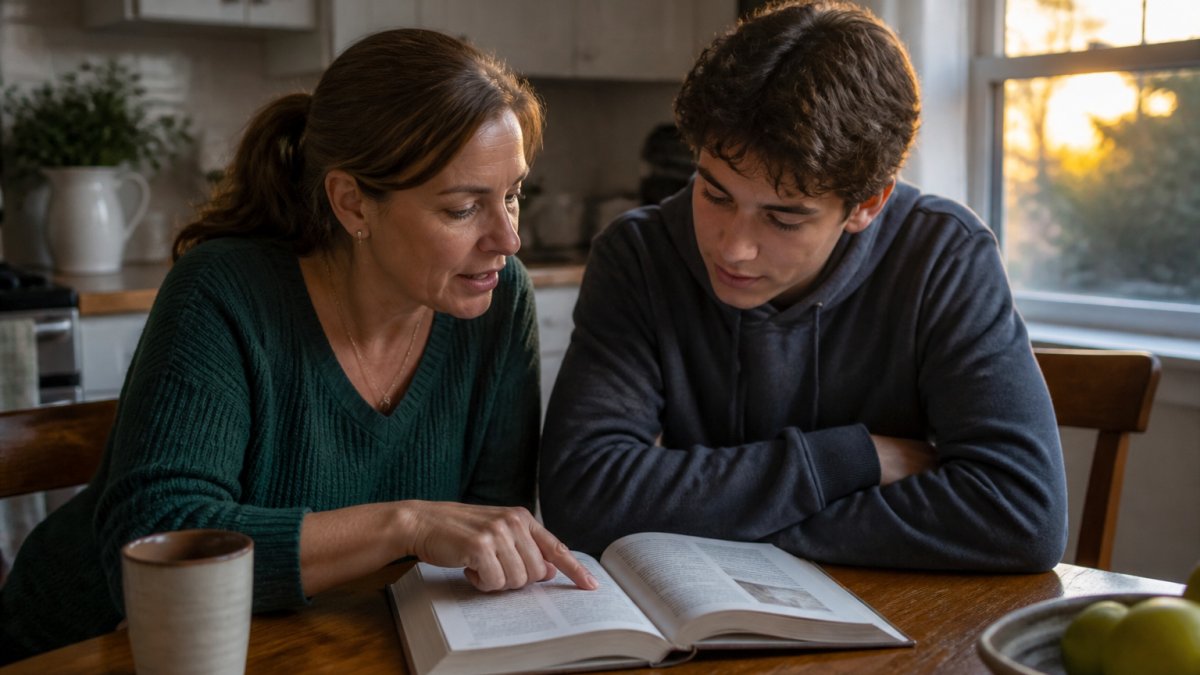
Try this tonight. Pick one chapter about communication. Read it before your teen gets home. Then use a single technique from it during dinner.
Turning a Chapter Into a Conversation
The trick is to turn reading into doing. A book only helps if it changes what happens in your kitchen.
Here's a simple routine:
- Read one short chapter, not the whole book.
- Pick one idea that fits your family.
- Try it once, without expecting perfection.
- Note what happened, calmly.
- Adjust and try again tomorrow.
The Limits of Evidence Based Parenting Books
Evidence based parenting books are a tool, not a cure. They can't replace a therapist, a doctor, or your own knowledge of your child. Research shows what works on average, and your teen is not an average.
Some problems need professional help. Anxiety, depression, and serious behavioral issues call for a trained clinician. A book can support that work, but it can't stand in for it.
That's an honest limit, not a weakness. Knowing when to reach for more help is part of good parenting. The right book tells you when to do exactly that.
Conclusion: Making the Choice That Fits Your Family
Choosing a parenting book is really a choice about what you trust. Anecdotes are easy to find. Solid, research-backed guidance takes more work to spot, and it's worth the effort when your teen is struggling.
At HW Premier Publishing, we publish evidence-based guides built for real families. Our books help you manage emotional triggers, build communication skills, and strengthen the bond with your teen. Each title is written to be clear, practical, and free of jargon.
Get started with HW Premier Publishing and turn one good chapter into a real change at your kitchen table.
Frequently Asked Questions
What does evidence-based parenting mean?
Evidence-based parenting means the strategies come from peer-reviewed research in child development and psychology, not just one person's experience. Authors cite studies on how teenagers regulate emotions, communicate, and build independence. When you choose evidence based parenting books, you get methods that have been tested with real families and adjusted based on what actually worked. This matters because teenagers change fast, and advice rooted in research tends to hold up better than tips that worked for one child in one household.
How can you tell if a parenting book is based on reliable research?
Check the back matter first. A research-backed book typically includes a reference list, endnotes, or a section explaining the studies behind its recommendations. Look for the author's credentials and whether they describe sample sizes, age ranges, or limitations. If a book promises a fix for every teenager without mentioning any research, treat that as a warning sign. The best parenting books based on research also tell you when the evidence is mixed, not just when it supports their point.
Are evidence-based parenting books better than books based on personal experience?
Neither type is useless, but they answer different questions. A memoir shows one family's path; a research-based guide shows patterns across thousands of families. For issues like teen anxiety, anger, or family conflict, patterns matter more than one story. That said, experience-based books can be comforting and readable. Many parents use both: a story for encouragement and a research-based guide for the actual steps. When the stakes are high, research-based parenting advice gives you a stronger starting point.
Can research-based parenting advice work for every child?
No single approach fits every teenager, and good research-based books say so. Studies report average effects, which means some families see big changes and others see smaller ones. The advantage is that evidence-based methods usually include guidance on adapting steps to your child's temperament and your family's situation. If a book claims one method works for every child in every situation, that claim goes beyond what the research supports. Use the principles as a framework, then adjust based on what you see at home.