
Teaching Civic Responsibility to Young Adults: A 2026 Guide

Table of Contents
- Why Teaching Civic Responsibility to Young Adults Looks Different Now
- Civic Responsibility Examples That Make Sense to an 18-Year-Old
- How to Teach Civic Education Without Lecturing
- Civic Engagement Activities for Young Adults You Can Start This Month
- Youth Civic Engagement Strategies That Build Real Skills
- Digital Civic Participation and Misinformation Literacy
- Common Mistakes Parents and Mentors Make
- Conclusion: Start Small, Stay Consistent
- Frequently Asked Questions
Last Updated: October 12, 2026
Why Teaching Civic Responsibility to Young Adults Looks Different Now
Teaching civic responsibility to young adults in 2026 means something different than it did a generation ago. Most 18- to 25-year-olds now form their first political opinions online, in feeds built to reward outrage rather than understanding. That changes how the lesson has to be taught. This guide from HW Premier Publishing lays out a practical approach for parents, mentors, and educators.
Civic responsibility is the set of duties a person owes to their community and country, such as voting, serving on a jury, paying taxes, and speaking up on public issues.
The old model assumed young people would absorb civic habits by watching adults. That assumption no longer holds. Many young adults live far from home, work irregular schedules, and get their news from short videos. They still care about the common good. They just need the skills explained in plain language, without a lecture.
Below, we break down what actually works: everyday examples, a weekly teaching framework, and activities you can start this month.
Civic Responsibility Examples That Make Sense to an 18-Year-Old
The best civic responsibility examples connect to things a young adult already does. Voting is the obvious one, but it's not the only one.
Everyday Examples vs. Headline Examples
Headline examples, like running for office or leading a protest, feel out of reach for most young people. Everyday examples land better:
- Showing up for jury duty when called
- Reading a local ballot measure before voting
- Volunteering at a food bank or animal shelter
- Attending a city council or school board meeting
- Fact-checking a post before sharing it
- Paying taxes honestly, even on gig income
These small acts build the same muscle as bigger ones. A young adult who has sat through one zoning hearing understands local government better than someone who has only read about it.
How to Teach Civic Education Without Lecturing
The fastest way to lose a young adult is to start with a speech. Instead, try asking what they already think, then work from there. The goal is a repeatable structure that builds civic knowledge and confidence without turning every conversation into a debate.
A Simple Weekly Framework
Set aside 30 minutes once a week. Keep it casual, like a conversation over dinner or a walk.
- Pick one issue. Choose something local, like a new bus route or a school budget.
- Ask what they think. Let them talk first. Don't correct them yet.
- Find one fact together. Look up the actual policy or proposal. USA.gov’s official government information and services site is a good starting point.
- Ask what could change their mind. This builds open-mindedness.
- Close with one small action. Signing a petition, emailing a representative, or just reading more.
This framework teaches civic skills without turning into a debate club. It also works for a group, like a youth program or a classroom.
A Four-Session Plan You Can Run This Month
If you want something more structured than a weekly chat, run four sessions back to back. Each one takes about 45 minutes and works for one young adult or a small group.
Session 1, How a decision actually gets made. Pick one local body, such as a city council or school board. Walk through who sits on it, how often it meets, and how a single item moves from proposal to vote. Have the young adult find the meeting agenda online before you talk.
Session 2, Reading a primary source. Choose one short document: a ballot measure summary, a city budget page, or a bill text. Read it together and underline every word that isn't plain English. Looking up those terms is the lesson.
Session 3, Following the money and the incentives. Ask who benefits from a proposal and who pays for it. This is where young adults start to see that most public questions involve trade-offs, not villains.
Session 4, Taking one real action. Pick a single step: registering to vote, submitting a public comment, or attending a meeting. Do it together the first time so the mechanics aren't a barrier.
Measuring Whether It's Working
Civic growth is hard to see week to week, so track a few plain indicators instead of relying on a feeling:
- Knowledge: Can they explain how a local decision gets made without notes?
- Confidence: Do they volunteer an opinion before you ask?
- Participation: Have they registered to vote, attended a meeting, or contacted an official?
- Deliberation: Can they restate an opposing view fairly before responding to it?
A simple pattern many mentors use is a one-line note after each session: what the young adult understood, what they pushed back on, and what action they took. Over a few months, those notes show real movement.
Keeping It Nonpartisan
Teaching civic responsibility is not the same as teaching a position. A few habits keep the line clear:
- Teach the process, not the conclusion. How a bill becomes law is neutral; which bill is best is a judgment the young adult should reach.
- Name your own lean when it's relevant. Saying "I tend to favor this, but here's the strongest argument against it" models honesty instead of hiding a bias.
- Use questions that have more than two answers. "What are three ways to address this?" is harder to turn into a shouting match than "Are you for or against it?"
- Rotate the issues. If every session lands on the same topic, the young adult will read the whole exercise as a campaign.
For families who want a deeper, structured read on how democracy works day to day, A Reminder of What Democracy Is pairs well with this weekly habit.
Civic Engagement Activities for Young Adults You Can Start This Month
Civic engagement activities work best when they're low-commitment at first. Here's a starter list you can try this month.
See A Reminder of What Democracy Is →
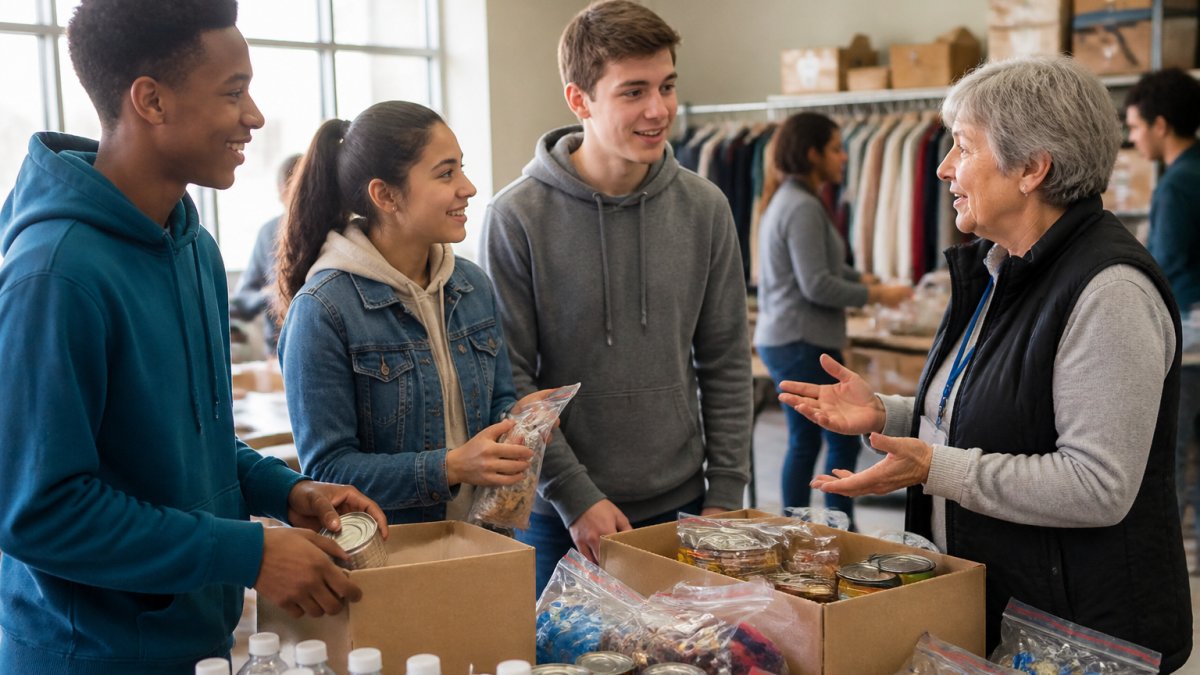
- Volunteer once. One shift at a shelter or community garden is enough to start.
- Attend a public meeting. City council and school board meetings are open to everyone.
- Register to vote. Many states let you register online. Check your state's official election site.
- Write to a representative. A short, respectful email counts.
- Join a local group. Neighborhood associations, cleanup crews, and library friends groups all need help.
The point isn't to do all five. Pick one, do it once, and see how it feels. Momentum beats a perfect plan.
Activity | Time Needed | Frequency | Skill It Builds |
|---|---|---|---|
Volunteer shift | 2-3 hours | Monthly | Community service |
Public meeting | 1 hour | Quarterly | Local government knowledge |
Voter registration | 10 minutes | Once | Civic participation |
Letter to a representative | 20 minutes | As needed | Advocacy |
Local group membership | 1-2 hours | Monthly | Leadership |
Youth Civic Engagement Strategies That Build Real Skills
Good youth civic engagement strategies build three things: knowledge, confidence, and the ability to disagree well.
Handling Disagreement Without Shutting Anyone Down
Disagreement is where most civic conversations fall apart. A few ground rules help:
- Attack the idea, not the person.
- Ask "why do you think that?" before pushing back.
- Admit when you don't know something.
- Let silence sit. People need a second to think.
These habits turn a tense talk into a real one. They also model the kind of public discussion a healthy democracy needs.
Digital Civic Participation and Misinformation Literacy
Most young adults now do their civic learning online, which makes misinformation literacy a core civic skill. Teaching it is simple: slow the share button down.
Teach these four checks:
- Who said it? Find the original source, not a screenshot.
- When was it posted? Old stories get recycled as new ones.
- What's the evidence? A claim without a source is just an opinion.
- Why am I seeing this? Feeds reward strong reactions.
For young people who want to build the confidence to speak up online and offline, Build Your Voice for Teens offers practical exercises.
The Federal Trade Commission's consumer advice on spotting scams and false claims is a plain-language primer on how misleading posts and offers work.
Common Mistakes Parents and Mentors Make
The biggest mistake is treating civic education as a one-time talk. It's a habit, not a lecture.
Other common errors:
- Only talking about national politics. Local issues feel more real and are easier to act on.
- Expecting instant agreement. Young adults need room to form their own views.
- Skipping the "how." Saying "vote" isn't enough. Show them how to register and where.
- Making it partisan. The goal is civic skill, not a particular vote.
- Giving up after one bad conversation. Keep the door open.
Avoid these, and the weekly habit will do most of the work.
Conclusion: Start Small, Stay Consistent
Civic responsibility grows from small, repeated actions, not grand gestures. One conversation, one volunteer shift, one fact-check at a time.
If you want a clear, nonpartisan guide to hand a young adult, HW Premier Publishing offers accessible civic nonfiction and practical books for teens and families. Our titles are built to be read, not shelved, with plain language and real-world exercises.
Start with one weekly talk and one small action. Then keep going.
Frequently Asked Questions
What responsibilities do young adults have as citizens?
Young adults carry the same core responsibilities as any citizen: staying informed, voting in local and national elections, following laws, serving on a jury when called, and contributing to their communities. What changes at 18 is that these duties become yours to act on directly. Many young adults also take on roles like volunteering, attending public meetings, or helping neighbors, which build civic skills that last decades.
What are some examples of civic responsibility in daily life?
Civic responsibility examples include registering to vote, showing up to local government meetings, volunteering at a food bank, serving on a jury, paying taxes, and speaking up at a school board or city council session. Smaller actions count too, like helping a neighbor, picking up litter in a shared space, or fact-checking a claim before sharing it. The common thread is acting in ways that support the community, not just yourself.
How can families encourage young adults to get involved in their communities?
Start by inviting rather than assigning. Ask what issue your young adult already cares about, then find one concrete way to act on it together, such as volunteering once a month or attending a local meeting. Model the behavior yourself and talk about what you did. Research on youth civic engagement shows that family discussion and example make a real difference.
How can young adults evaluate political information and sources?
Teach a quick check: who published it, what evidence is offered, and what other outlets say. Cross-reference claims against at least two independent sources before sharing. Look for named authors, dates, and links to original data. If a post relies on outrage or urgency without verifiable facts, treat it as a signal to slow down, not to share.
Teaching civic responsibility to young adults takes patience, but it pays off in engaged citizens who can think for themselves. HW Premier Publishing publishes evidence-based, jargon-free guides that make hard topics feel doable, including award-winning civic nonfiction like A Reminder of What Democracy Is (winner, 2026 Positive Impact Book Awards, Social Justice & Advocacy) and teen confidence workbooks. Explore our books and find the right fit for your family. Get started with HW Premier Publishing and build civic habits that last.