
Ball Python Feeding Schedule Guide: Prey Size & Timing
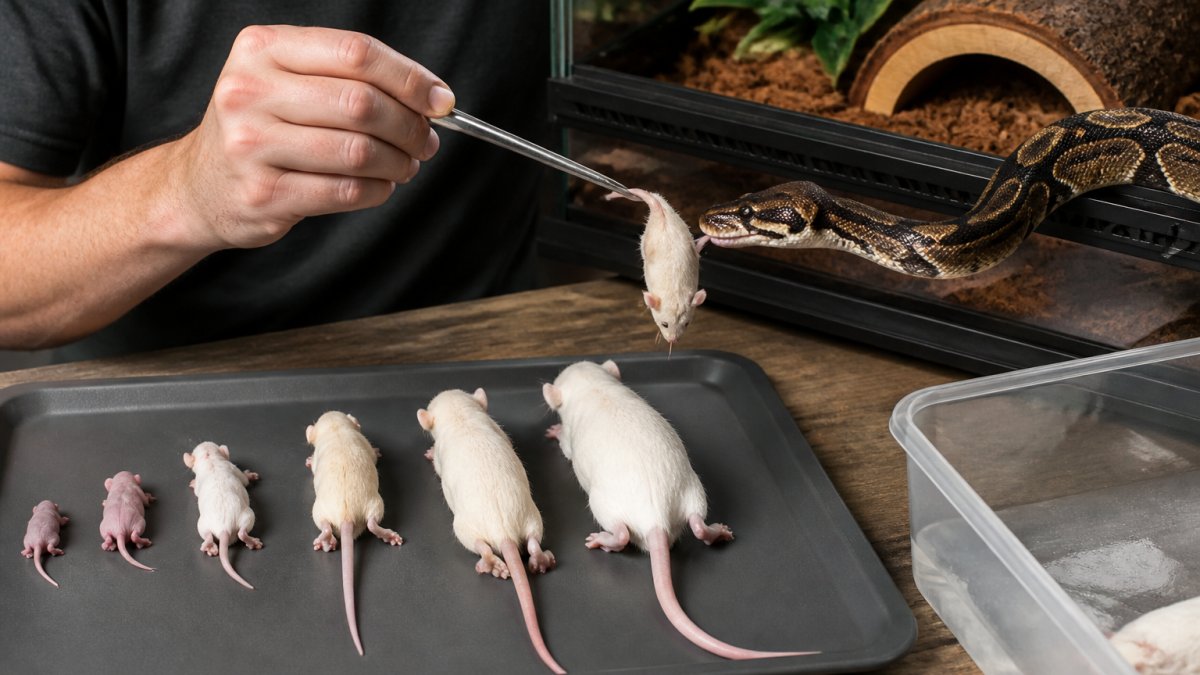
Table of Contents
- Ball Python Feeding Schedule Guide: Weight-Based Timing and Prey Size Charts
- Why a Weight-Based Approach Beats Calendar Feeding
- Ball Python Prey Size Chart: Matching Rodent to Snake Girth
- Frozen vs Live Feeder Rodents: Safety, Nutrition, and Practicality
- Ball Python Feeding Strike Solutions: Troubleshooting Refusals
- Seasonal Metabolic Fluctuations and Fasting
- Body Condition Scoring: The Visual Check for Obesity and Underweight
- Post-Feeding Environmental Management
- Transitioning Prey Types
- Frequently Asked Questions
Last Updated: October 3, 2026
Ball Python Feeding Schedule Guide: Weight-Based Timing and Prey Size Charts
A ball python feeding schedule works best built around body weight, not the calendar. This guide from HW Premier Publishing covers weight-based timing, prey size charts, and troubleshooting for every life stage.
Most feeding problems start with one mistake: treating every ball python like it eats on the same clock. A hatchling and a five-year-old adult have different metabolic needs, and a schedule that ignores body weight will either underfeed a juvenile or push an adult toward obesity.
Why a Weight-Based Approach Beats Calendar Feeding
Calendar feeding assumes every snake burns energy at the same rate. They don't. A ball python's metabolism shifts with age, body weight, activity, and season, so a fixed "every Tuesday" schedule drifts out of sync.
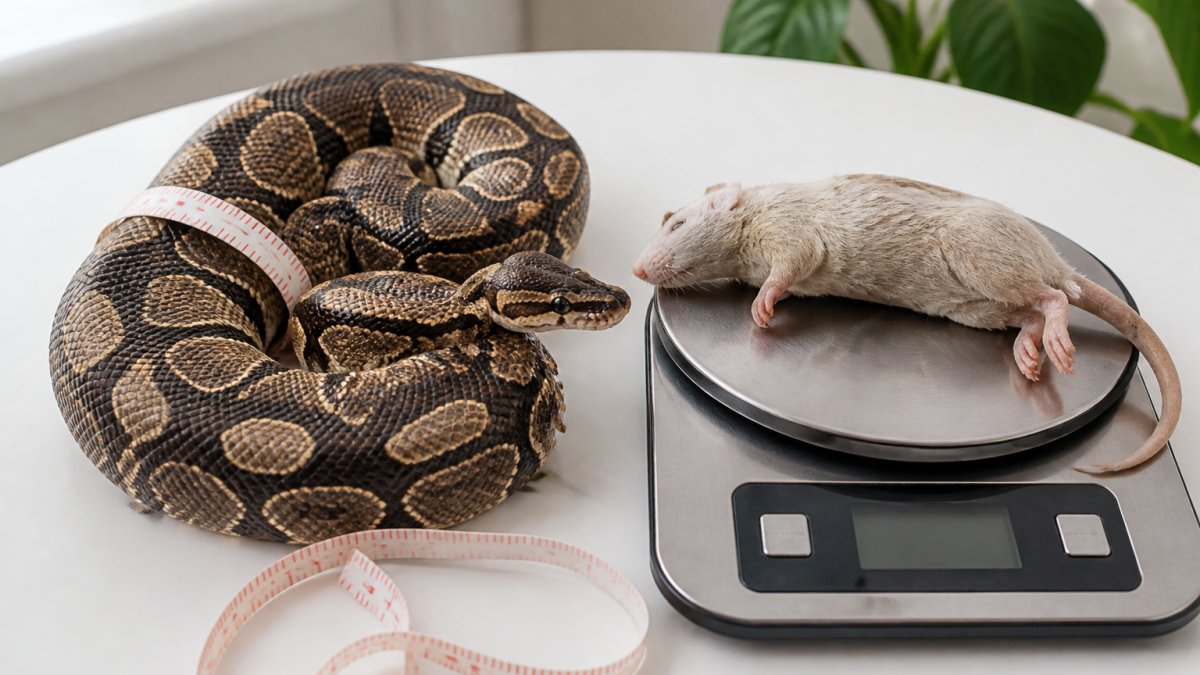
Weight-based feeding replaces the calendar with two measurements: the snake's body weight and the prey's weight. Prey equal to roughly 10 to 15 percent of body weight suits growing juveniles; adults do well on smaller percentages offered less often.
Ball Python Prey Size Chart: Matching Rodent to Snake Girth
The right prey item is roughly the same width as the widest part of your snake's body.
| Life Stage | Typical Snake Weight | Prey Size | Feeding Frequency |
|---|---|---|---|
| Hatchling | Under 100 g | Small mouse or rat pinky | Every 5-7 days |
| Juvenile | 100-500 g | Weaned mouse to small rat | Every 7 days |
| Sub-adult | 500-1,000 g | Small to medium rat | Every 7-10 days |
| Adult | 1,000 g+ | Medium rat | Every 10-14 days |
How to Measure Without a Scale
No scale? Use the girth method. Lay the snake straight and find its widest point, usually just behind the head or at mid-body, then compare that width to the rodent's thickest section.
A common mistake is eyeballing prey by length. Rodent length tells you almost nothing about how much meat the snake is getting. Girth and weight are what matter.
Frozen vs Live Feeder Rodents: Safety, Nutrition, and Practicality
Frozen-thawed rodents are the safer default for most keepers. A live rodent can bite and scratch a snake that isn't hungry, and those injuries can become infected.
Live feeding has one advantage: it triggers a strong feeding response in snakes that refuse everything else.
Nutritional value is comparable when frozen prey is stored and thawed correctly; improper thawing is where nutrition and safety both suffer.
Safe Thawing and Preparation Techniques
Thaw frozen prey in the refrigerator overnight, then warm it to room temperature before offering. Never microwave a rodent. It cooks unevenly and can burn your snake's mouth or digestive tract.
- Thaw in the fridge for 8-12 hours
- Warm to room temperature in a sealed bag
- Use warm water, not hot, to bring it up to feeding temperature
- Offer with tongs, never your bare hands
If the prey still feels cold in the center, it isn't ready. A partially frozen meal can cause regurgitation.
Ball Python Feeding Strike Solutions: Troubleshooting Refusals
A feeding strike is a refusal to eat, and it is the most common concern new keepers raise. The fix almost always starts with husbandry, not the snake. What follows is a decision tree you can run in order, from cheapest and most likely to most involved.
Step 1: Rule Out the Obvious Before You Change Anything
Before you touch a single setting, confirm the snake is not in a normal, expected fast. Ball pythons commonly refuse food during breeding season (roughly November through March for many captive animals), during a shed cycle, and in the days after a large meal. A refusal during any of those windows is not a problem to solve, it is a problem to wait out.
Step 2: Run the Husbandry Audit in This Order
Work through these in sequence, each is a real, measurable variable.
- Temperature gradient. The warm side should sit in the high 80s to low 90s Fahrenheit, with a cool side in the high 70s. A snake that cannot reach its preferred body temperature will not digest, and a snake that cannot digest will not eat. Measure with a digital probe or infrared thermometer, not an analog dial.
- Hide security. A ball python that feels exposed will refuse food even when everything else is perfect. Two tight, dark hides, one on the warm side, one on the cool side, is the baseline. If your hide has an open bottom and a wide entrance, it is not a hide.
- Handling frequency. Handling in the 48 hours before a feeding attempt suppresses the feeding response in many animals. Stop all handling for a full week before your next attempt.
- Enclosure traffic and vibration. A cage in a hallway, next to a subwoofer, or in a room with a dog will produce chronic low-grade stress that shows up as refusal.
- Prey temperature and presentation. A prey item that is warm on the outside and cold in the center reads as "dead and unsafe" to a hesitant snake. Warm the prey to roughly 100-105 degrees Fahrenheit at the head, and offer it with tongs so it moves like live prey.
Step 3: The Refeed Protocol
If the snake has refused, do not offer food again the next day. Offering daily is the most common mistake keepers make, and it converts a short strike into a long one by piling stress on stress.
- Wait a full 7 days between attempts.
- On attempt day, offer at dusk or after dark. Ball pythons are crepuscular and nocturnal, and many reluctant feeders respond far better to a nighttime offering than a midday one.
- Offer a prey item one size smaller than normal. A small, warm, moving target is easier to commit to than a large one.
- If the snake refuses, remove the prey, do not handle the snake, and reset the 7-day clock.
- After two or three refusals, stop offering entirely for 2-3 weeks. A short "reset" fast often breaks a strike that repeated offerings only prolong.
Step 4: Know When It Is No Longer a Strike
A feeding strike is a behavioral refusal in a snake that is otherwise healthy and maintaining weight. It becomes a medical issue when any of these appear:
- Steady weight loss across multiple weigh-ins (not a single low reading)
- Regurgitation after eating
- Open-mouth breathing, wheezing, or mucus around the mouth or nostrils
- Visible swelling, wounds, or mites
- Lethargy that persists even when the snake is warm
Step 5: The Last-Resort Options, in Order
Only after husbandry is verified and the snake has had a genuine multi-week reset should you escalate. Change one variable at a time so you know what worked.
- Scenting. Rub a thawed rat against a mouse, or dip the prey's head in warm chicken broth (no salt, no onion, no garlic).
- Prey temperature bump. Raise the head of the prey to roughly 105-110 degrees Fahrenheit. Many strikes end at this step alone.
- Live prey. This is the option with real risk, a live rodent can bite and scratch a snake that is not hungry, and those wounds can become infected. If you use it, supervise the entire interaction and remove the rodent immediately if the snake does not strike within a few minutes.
- Veterinary evaluation. A fecal float, a physical exam, and a review of your husbandry records will catch the cases that no amount of scenting will fix.
Seasonal Metabolic Fluctuations and Fasting
Ball pythons often eat less during cooler months, and some fast entirely for weeks or months. This is a normal metabolic response, not a sign of illness on its own.
The key is monitoring body condition rather than panicking at every skipped meal. If your snake maintains weight and condition through a fast, it's likely fine.
Body Condition Scoring: The Visual Check for Obesity and Underweight
Body condition scoring is a visual and hands-on check of whether your snake carries too much or too little fat. A healthy ball python has a rounded, loaf-like cross-section with a slightly squared belly.
Obesity is common in captive ball pythons because they're fed rich prey on a generous schedule with little activity. An overweight snake can develop fatty liver and other health problems.
Post-Feeding Environmental Management
The 48 hours after a meal matter more than most keepers realize.
Keep the enclosure's warm side stable and avoid handling for at least 48 hours after feeding.
If a snake regurgitates, wait about two weeks before offering food again, and start with a smaller prey item than usual. Rushing the next meal usually backfires.
Transitioning Prey Types
"Transitioning prey types" is really two different projects, and conflating them is why so many keepers fail at both. The first is switching from mice to rats; the second is switching from live to frozen-thawed. They require different tactics, timelines, and patience, treat them as separate protocols.
Transition 1: Mice to Rats
Rats are the better long-term staple for most adult ball pythons because a single rat delivers more mass per feeding than the multiple mice it takes to match it.
The scent-transfer method, step by step:
- Thaw one rat and one mouse. Do not skip the mouse, it is your scent donor.
- Rub the mouse thoroughly against the rat, focusing on the rat's head and the area around its face.
- Offer the scented rat at dusk, using tongs, with a slow, prey-like movement.
- If the snake takes it, repeat the scenting for the next 3-4 feedings, then reduce the amount of mouse contact each time.
- By roughly the fifth or sixth feeding, offer an unscented rat. Most snakes that accepted scented rats will take an unscented one at this point.
If the snake refuses the scented rat:
- Do not offer a mouse as a backup on the same night. That teaches the snake that refusing a rat earns it a mouse.
- Wait 7 days and try again with a more heavily scented rat.
- If three consecutive scented-rat attempts fail, go back to mice for two feedings to stabilize the snake's weight, then restart the protocol.
The transition typically takes 4-8 weeks. Snakes switched during a period of strong feeding response, typically spring and early summer, tend to convert faster than snakes switched in the fall.
Transition 2: Live to Frozen-Thawed
The live-to-frozen transition is the harder of the two, and the one where keepers most often give up too early. The snake is not being stubborn; it is responding to a genuine difference in heat signature, movement, and scent. Your job is to close that gap.
The pre-work:
- Confirm the snake is eating reliably on live prey before you start. Do not attempt this transition with a snake that is already fasting.
- Confirm your thawing and warming routine is dialed in. A cold-centered prey item will fail this transition every time.
- Set aside 6-10 weeks. This is not a one-week project.
The protocol:
- Skip one feeding. Let the snake be genuinely hungry before the first frozen-thawed attempt. A snake that ate three days ago has no motivation to work for a meal.
- Thaw correctly. Refrigerator for 8-12 hours, then warm in a sealed bag in warm (not hot) water until the prey reaches roughly 100-105 degrees Fahrenheit at the head. Check the center with an infrared thermometer, if it reads below 90 degrees, keep warming.
- Present with movement. Use tongs to drag the prey across the enclosure floor in short, jerky motions that mimic a live rodent. A motionless thawed rodent on a plate reads as carrion to many snakes.
- Offer at night. Ball pythons are crepuscular. A 9 p.m. offering outperforms a 9 a.m. offering for most reluctant converters.
- Give it 60 seconds. If the snake does not strike within a minute, remove the prey, wait 7 days, and try again. Leaving the prey in the enclosure overnight teaches the snake nothing and fouls the cage.
- Do not offer live prey as a fallback on the same night. This is the single most common reason transitions fail. The snake learns that refusing frozen earns it live.
If the snake refuses three frozen-thawed attempts in a row:
- Try a smaller prey item. A smaller, warmer, more mobile target is easier to commit to.
- Try a different color morph of rodent. Some snakes show a preference for dark-furred over white-furred prey, or vice versa.
- Try braining, piercing the skull of the thawed prey so a small amount of brain matter is exposed. This is an old, widely used technique and it works on a meaningful percentage of holdouts.
- If all of the above fail across 6-8 weeks, go back to live feeding for two or three meals to stabilize the snake, then restart the protocol from step 1. A second attempt after a reset succeeds far more often than a first attempt that is pushed too long.
What Not to Do
- Do not switch back and forth between mice and rats within the same week. Pick a target and commit to it for at least a month.
- Do not handle the snake on transition feeding days. Handling suppresses the feeding response you are trying to build.
- Do not attempt a prey-type transition and a live-to-frozen transition at the same time. Do one, stabilize, then do the other.
- Do not assume a snake that refuses frozen-thawed will never take it. Most will, given enough time, correct prey temperature, and a genuine hunger window.
For keepers who want a structured reference, HW Premier Publishing's pet-care handbooks walk through these transitions step by step, alongside body condition scoring and seasonal feeding adjustments.
Frequently Asked Questions
How to tell when a ball python is hungry?
A hungry ball python often shows increased activity, especially at night, and may sit with its head raised near the enclosure front. It might also track movement outside the glass or strike at the lid when you open it. These are natural feeding responses, but they do not always mean it is time to feed. Always check your schedule and body condition score before offering prey, because overfeeding can lead to obesity and digestive issues.
Can you feed ball python 2 days in a row?
No, feeding a ball python two days in a row is not recommended. Ball pythons have a slow digestive cycle and need time to process a meal. A typical feeding schedule for an adult is every 10 to 14 days, while juveniles eat every 7 to 10 days. Feeding too frequently can cause regurgitation, obesity, and stress. Stick to a weight-based schedule and allow at least 48 hours after feeding before handling.
How long can a ball python go without feeding?
A healthy adult ball python can safely go several weeks without food, especially during seasonal fasting. However, hatchlings and juveniles should not go longer than 10 to 14 days without eating. If your snake refuses food for more than three weeks, check your temperature gradient, humidity, and stress factors. A feeding strike is often a sign of improper husbandry rather than illness.
What is the ideal prey size for a ball python?
The ideal prey size is roughly equal to the widest part of your ball python's body, or about 10 to 15 percent of its body weight. For example, a 500-gram juvenile typically eats a small rat or large mouse weighing 50 to 75 grams. Using a ball python prey size chart helps you match rodent size to snake girth and avoid overfeeding. When in doubt, choose slightly smaller prey rather than larger.
A ball python feeding schedule only works when it's built around your snake's actual body weight, prey size, and condition, not a fixed calendar. If you're tired of piecing together conflicting advice from forums, HW Premier Publishing offers expert-led, jargon-free exotic pet handbooks that turn scattered tips into a clear, evidence-based routine. Explore the collection and build a feeding plan you can trust, from hatchling to adult.