
Axolotl Care for Absolute Beginners: A 2026 How-To Guide
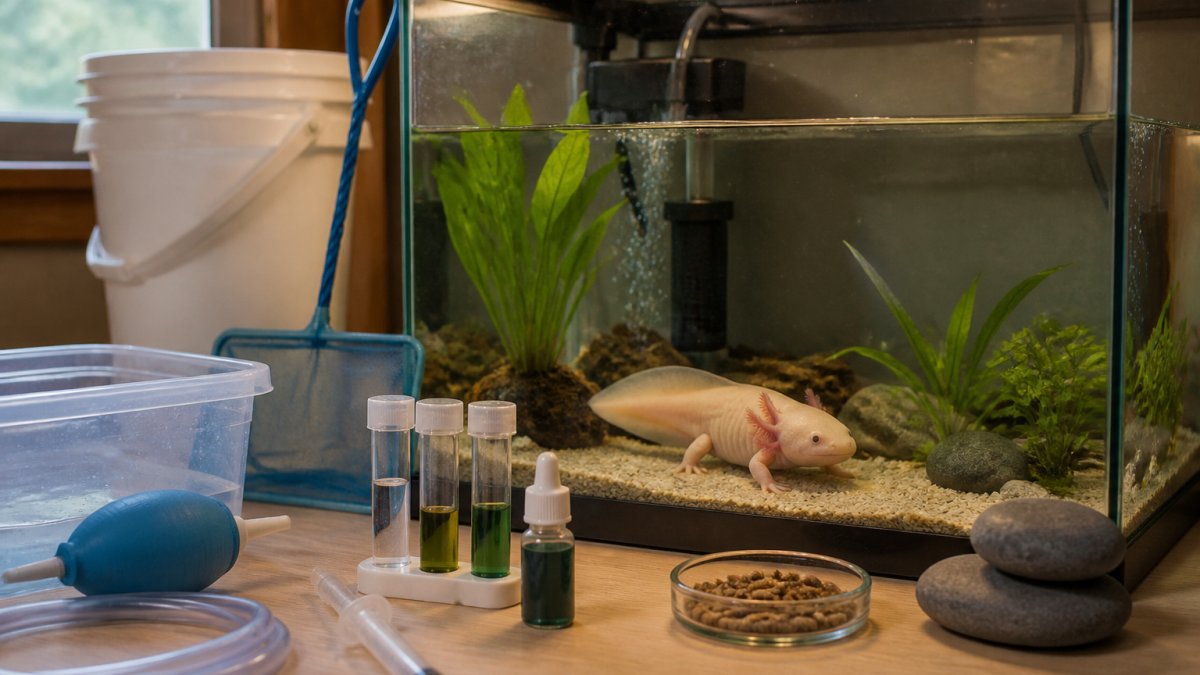
Table of Contents
- Axolotl Tank Size Requirements: Start With the Right Space
- Axolotl Cycling Process: Building a Safe Aquatic Habitat
- Axolotl Water Parameters Guide: pH, Ammonia, and Nitrates
- Best Diet for Pet Axolotls: What to Feed and How Often
- Filtration and Water Temperature Management
- Tubbing and Emergency Care for Axolotls
- Ethical Sourcing, Seasonal Care, and Long-Term Costs
- Conclusion: Your First Steps in Axolotl Care
- Frequently Asked Questions
Last Updated: October 7, 2026
Axolotl Tank Size Requirements: Start With the Right Space
Axolotl care starts with the tank. A single adult needs a minimum of 20 gallons (roughly 75 liters); 29 gallons or more is far easier to keep stable. These amphibians produce a heavy bio-load, so a tank that looks "big enough" often isn't.
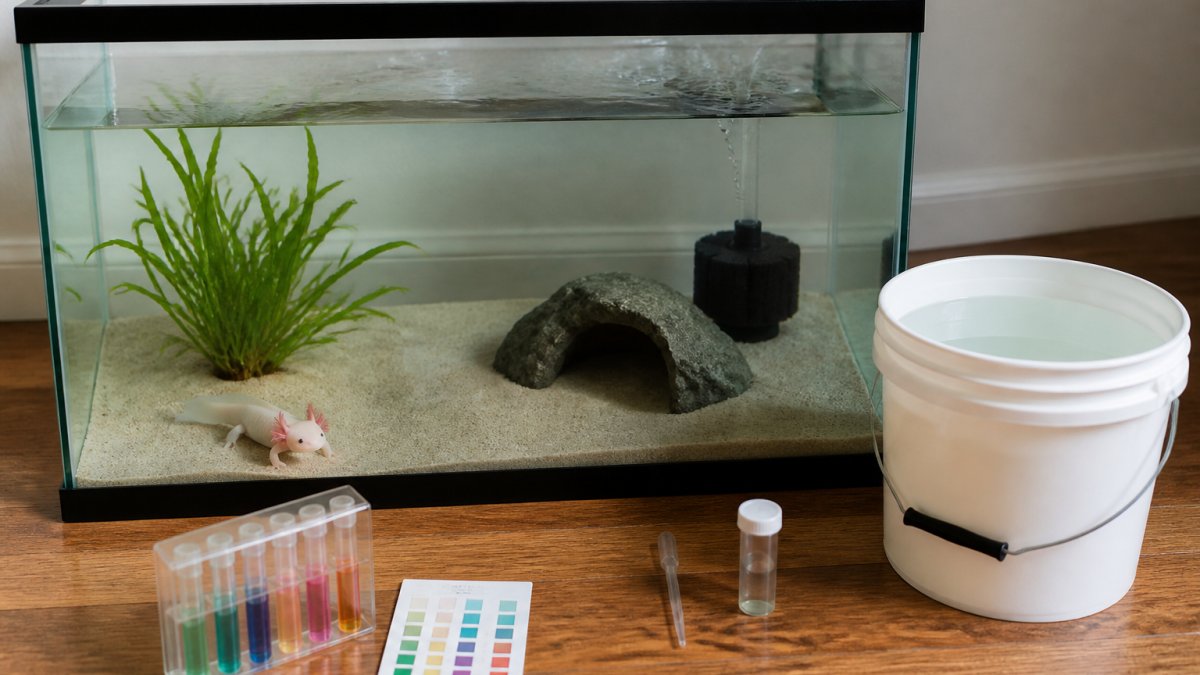
Tank Dimensions and Volume for One Axolotl
Axolotls are bottom-dwellers that need floor space more than height, so a long, shallow tank beats a tall, narrow one. For one adult, aim for at least 30 inches long and 12 inches wide. Add 10 gallons per additional axolotl, and house only same-size tankmates, since axolotls bite smaller companions.
Substrate and Decor: What to Avoid
The safest substrate is fine sand or a bare-bottom tank. Gravel is dangerous: axolotls swallow food whole by suction, and small stones cause impaction, a potentially fatal blockage. Avoid anything smaller than the axolotl's head. For decor, choose smooth hides and soft plants. Sharp edges tear their skin, and bright lights cause stress, so keep the tank dim with shaded hiding spots.
Axolotl Cycling Process: Building a Safe Aquatic Habitat
The axolotl cycling process is the step beginners skip, and it kills the most pets. Cycling grows beneficial bacteria in your filter that convert toxic ammonia into safer compounds. This takes weeks, not days. Set the tank up, add an ammonia source, and test until ammonia and nitrite read zero while nitrate climbs.
Step-by-Step Guide to Cycling Your Tank
A recommended process for a new setup:
- Fill the tank with dechlorinated water and install the filter and heater.
- Add a source of ammonia to start the nitrogen cycle.
- Test daily with a water testing kit and log the readings.
- Wait for ammonia to spike, then fall to zero.
- Watch nitrite spike and drop to zero.
- Confirm nitrate levels are rising, then do a partial water change.
- Only add your axolotl once ammonia and nitrite stay at zero for several days.
Axolotl Water Parameters Guide: pH, Ammonia, and Nitrates
An axolotl water parameters guide boils down to four weekly numbers: pH, ammonia, nitrite, and nitrate. Keep pH balance between 6.5 and 8.0, ideally 7.4 to 7.6. Ammonia and nitrite must stay at zero, nitrate below 20 ppm, and a water testing kit is the only reliable way to know.
Using a Water Testing Kit
Liquid test kits beat strips for accuracy. Test water chemistry weekly and after any water change or new addition, and record everything. If ammonia or nitrite appears, do an immediate partial water change with dechlorinated water and a water conditioner.
Best Diet for Pet Axolotls: What to Feed and How Often
The best diet for pet axolotls is a staple of high-quality sinking pellet diet for carnivorous amphibians, supplemented with bloodworms and occasional earthworms. Feed juveniles once or twice daily, adults every two to three days.
Variety supports gill health and steady growth, but treats should stay occasional. Remove uneaten food within a few hours and keep a written feeding schedule to prevent overfeeding.
Life Stage | Food | Frequency | Portion |
|---|---|---|---|
Juvenile | Pellets, bloodworms | 1-2 times daily | Head-sized |
Adult | Pellets, earthworms | Every 2-3 days | Head-sized |
Treats | Bloodworms | Once weekly | Small |
Filtration and Water Temperature Management
Water temperature is the parameter beginners underestimate, and it kills fastest. Axolotls thrive between 60°F and 68°F, tolerate a slow drift to about 70°F, and show stress above 72°F. Sustained heat suppresses the immune system, shuts down appetite, and invites infections. Most homes run warmer than 68°F, so temperature regulation is the core of the setup.
Why Temperature Matters More Than You Think
Axolotls are ectotherms: their body temperature tracks the water, and so does every enzyme in their digestive and immune systems. When water warms, metabolism speeds up, oxygen demand rises, and immune response weakens.
A practical target: hold 64°F. That sits mid-range, buffers you before 72°F, and keeps digestion steady. Juveniles tolerate the same range as adults. Do not warm the tank to "help them grow."
Cooling Methods, Ranked by Reliability
- Aquarium chiller. The only method that holds a set temperature through a multi-day heatwave. Sized to your tank volume, it runs continuously in summer and cycles off in winter. It is the largest single equipment cost, but the difference between a stable animal and a seasonal emergency.
- Surface fans. Fans blowing across the water drive evaporative cooling. Expect a 2-4°F drop in dry air, less in humid climates. Top off with dechlorinated water daily, because evaporation concentrates minerals.
- Frozen water bottles. Free and effective for a few hours. Rotate two or three sealed bottles through the day. Never dump ice directly into the tank. Rapid swings stress the animal more than a slow drift.
Choosing a Filter for a Slow-Moving Amphibian
Axolotls have delicate external gills and a heavy bio-load, so the filter must host enough beneficial bacteria to process ammonia while moving water gently enough that the animal isn't fighting a current.
- Sponge filter. The beginner's best friend: an air-pump-driven sponge filter provides gentle flow, enormous bacterial surface area, and won't blow a slow-moving axolotl around. Cheap, nearly silent, safe for juveniles.
- Canister or hang-on-back filter. Higher capacity, but baffle the output: aim the return at the tank wall or add a spray bar so the current disperses before reaching the animal.
- Avoid powerheads and strong internal pumps. A direct current causes stress signs like curled gills, frantic swimming, and refusal to eat.
Never replace all the filter media at once. Rinse sponge or ceramic media in a bucket of tank water during water changes. Tap water kills the bacteria you spent weeks growing.
Maintenance Rhythm That Keeps Parameters Stable
- Weekly: test pH, ammonia, nitrite, and nitrate with a liquid kit. Do a water change of about 20 percent using dechlorinated, temperature-matched water.
- Weekly: rinse filter media in old tank water if flow has slowed.
- Daily in summer: check temperature and top off evaporation with dechlorinated water.
Consistency beats intensity: a small weekly water change keeps bio-load in check far better than a large monthly one, and lets you catch problems early.
Tubbing and Emergency Care for Axolotls
Tubbing means moving a sick axolotl into a small, clean container of cool dechlorinated water for monitoring and treatment. It is the first response to injury, infection, or a crashed cycle.
If your tank's water parameters go wrong, tubbing buys you time to fix the main setup. Never medicate the display tank unless you've confirmed the diagnosis, since many treatments harm the beneficial bacteria your aquatic habitat depends on.
Ethical Sourcing, Seasonal Care, and Long-Term Costs
Most beginner guides stop at the tank. Three things actually decide whether your axolotl thrives: where it came from, how you survive summer, and what it costs to run. Almost nobody explains them.
How to Vet a Breeder Before You Buy
A healthy axolotl starts with a healthy source. Responsible breeders volunteer information; sellers who dodge questions are a red flag. Run this checklist before you commit:
- Ask for the hatch date. A reputable breeder will not sell an axolotl younger than about 3 inches / 2 months old. Juveniles sold too young are fragile, underfed, and prone to cannibalism in group tanks.
- Ask what the animal is eating. A breeder who says "pellets and live blackworms" is doing the work. A breeder who says "it eats whatever" is not.
- Ask to see the parents or the breeding pair. This is the fastest way to confirm the seller actually bred the animal rather than flipping it.
Seasonal Temperature Management: Surviving the Heat
Summer heat is the number one cause of beginner axolotl deaths, and it is entirely preventable. Axolotls evolved in cold, high-altitude water and show stress above 72°F. Most homes in July sit well above that. A tiered plan:
Tier 1: Free or nearly free (good for a few degrees):
- Float sealed frozen water bottles (2-liter soda bottles work well) and rotate them as they thaw.
- Aim a clip-on fan across the water surface. Evaporative cooling can drop a tank 2-4°F in dry air, but top off with dechlorinated water daily because evaporation concentrates minerals.
- Move the tank to the coolest room in the house, usually a basement or an interior hallway away from windows.
Tier 2: Moderate cost (good for steady summer control):
- A dedicated aquarium fan bank across the surface, paired with a lid-off setup.
- A small in-line or drop-in chiller sized for your tank volume. This is the only method that holds a set temperature through a multi-day heatwave.
Tier 3: Emergency (when the tank is already too warm):
- Tub the axolotl in a clean food-grade container of cool, dechlorinated water and float that tub in a larger cooler with ice packs. Change the tub water daily.
- Never dump ice directly into the display tank. Rapid temperature swings cause more harm than a slow drift.
Winter is easier, but not risk-free. Below about 60°F, appetite slows and digestion stalls; a small aquarium heater set to 64°F keeps feeding predictable. Check the setting whenever seasons change. A heater left on from last winter is a common cause of a summer crash.
What It Actually Costs to Keep an Axolotl
Prices vary by region and brand, so treat these as ranges, not quotes.
One-time setup:
- Tank (20-29 gallon long): $40-$120
- Sponge filter plus air pump and tubing: $25-$50
- Liquid water testing kit (not strips): $25-$40
Recurring monthly:
- Electricity for filter, air pump, and especially the chiller: this is the line item beginners miss. A chiller running through a warm summer can add noticeably to a power bill; a fan-only setup costs far less but only works in mild climates.
- Food (quality pellets plus occasional earthworms or bloodworms): modest, but real.
- Water conditioner and replacement test reagents: a few dollars a month.
The hidden cost nobody mentions: time. Weekly water changes, daily summer temperature checks, and logging test results take real minutes. If you can't commit to that rhythm, the animal suffers before your wallet does.
Conclusion: Your First Steps in Axolotl Care
Getting axolotl care right comes down to patience: cycle the tank fully, keep the water cool and clean, and feed a proper pellet diet. These steps can help prevent common beginner mistakes.
If you'd rather learn from a structured guide than piece together forum advice, Essential Guide to Exotic Pets by Luna Wildheart, from HW Premier Publishing, walks you through choosing and caring for unusual pets step by step. Our pet-care guides deliver clear, jargon-free instruction, and our broader catalog helps families build practical knowledge together.
Frequently Asked Questions
What is the minimum tank size for one axolotl?
A single adult axolotl needs at least a 20-gallon long tank. These are freshwater amphibians that grow up to 10-12 inches, so floor space matters more than height. A 20-gallon long gives them room to walk along the bottom. If you plan to keep two axolotls, add at least 10 gallons for the second one, so 30 gallons minimum. A 40-gallon breeder tank gives them more comfortable room. Always prioritize length and width over depth.
How often do I need to change an axolotl's water?
Change 20-30% of the water every week using dechlorinated water. This keeps nitrate levels below 20 ppm and removes waste before it turns into ammonia spikes. If your tank is still cycling, test water daily and change as needed. A water conditioner that removes chlorine and chloramine is essential. Never do a full water change unless you are treating an emergency, as it crashes your beneficial bacteria.
Can an axolotl live in dirty water?
No. Axolotls have sensitive gills and skin. Dirty water with high ammonia, nitrites, or nitrates causes gill damage, stress signs, and infections. A properly cycled tank with a sponge filter and weekly water changes keeps water parameters safe. If you see curled gills, floating, or loss of appetite, test the water immediately. Tubbing in clean, cool, dechlorinated water can help during a cycle crash.
Do axolotls like to be touched?
No. Axolotls are not tactile pets. Their skin is covered in a slime coat that protects against infection, and touching removes it. Handling also stresses them. Watch for stress signs like forward-curled gills or frantic swimming. The best way to interact is through observation and feeding. If you must move one, use a soft net or a container, never bare hands.